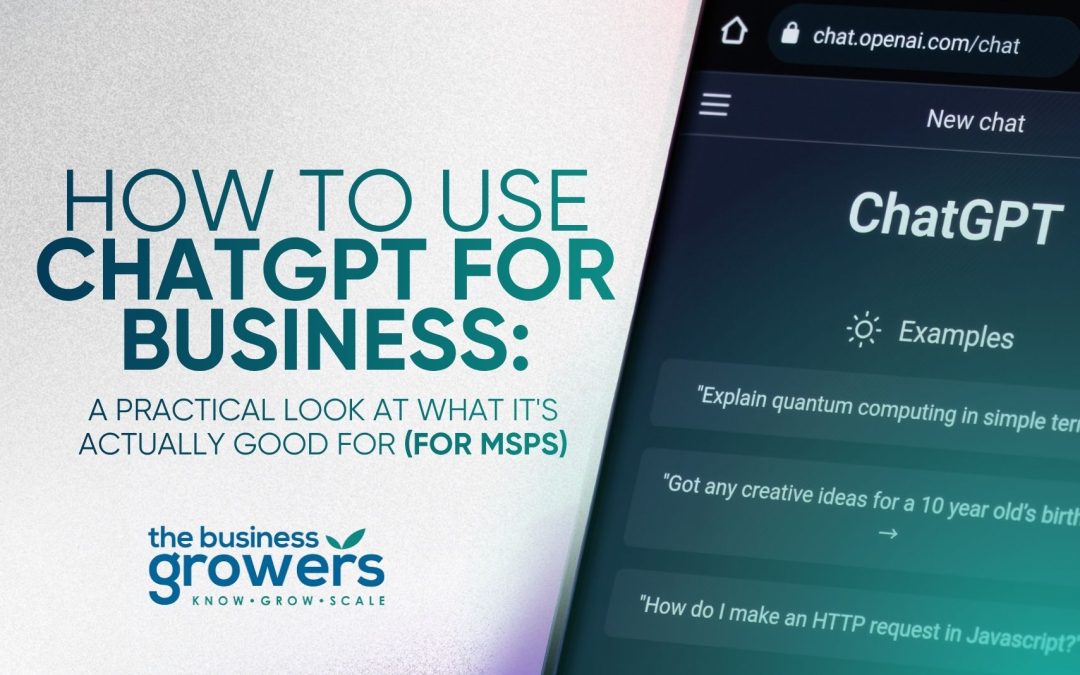
Your next client just asked ChatGPT for the best IT provider in their city. It named three MSPs and you weren’t one of them.
Its an AI visibility problem or more precisely lack of AEO. And it’s already costing MSPs deals they never knew existed.
AEO stands for Answer Engine Optimization. It means structuring your content so AI platforms can extract it and cite your MSP directly.
This guide shows you why you’re invisible in AI answers today. Then it shows you how to start fixing it.
Why Your MSP Is Invisible in AI Answers Right Now
Traditional Google search shows ten results. A prospect scans them, clicks a few, and compares. You get several chances to be seen.
AI answer engines don’t work that way. When someone asks ChatGPT or Perplexity a question, the system names two or three businesses. Everyone else disappears.
So if a buyer asks for the best managed IT provider in your area, AI picks a short list. You don’t rank fifth on that list. You simply aren’t there.
MSPs face more exposure to this shift than most B2B companies. Your buyers search locally, which shrinks the pool even further. Your services depend on trust, so an AI recommendation carries real weight.
The behavior change is already here, not coming later. Business buyers now lean on AI tools during research, often before they ever visit a website. They ask a question, read the answer, and shortlist from it.
Here’s a gut-check worth doing today. Open ChatGPT and ask for the best MSP in your city. Read what comes back, and note whether your name appears.
If it doesn’t, you found your baseline. That gap is exactly what AEO closes, and improving your AI Search Visibility starts with knowing where you stand.
What “Getting Cited” Means for Your AI Search Visibility
Getting cited means an AI platform names your MSP or uses your content to answer a prospect’s question. It happens differently on each platform, and those differences matter.
Google AI Overviews pull from Google’s existing index. If your pages rank well and answer questions directly, you have a real shot at a citation here. This is the closest cousin to traditional SEO.
ChatGPT behaves differently. It synthesizes answers from training data, then retrieves live pages when it searches. It reads far more content than it cites, so being found is not the same as being used.
Perplexity leans hardest on real-time results. It pulls from live web pages, references community forums, and shows its sources openly. Fresh, well-structured content can surface here within weeks.
One pattern holds across all three engines. Most brand mentions in AI answers come from third-party sources, not from the brand’s own website. AI trusts what others say about you.
That means your website is one signal among many. Reviews on Google and Clutch, LinkedIn posts, directory listings, and trade press all teach AI what your MSP actually does. Strong AI Search Visibility depends on all of them working together.
So getting cited isn’t only a content problem but also a presence problem across many surfaces at once. Your job is to give every surface the same clear story.
AEO vs SEO: What Changed for MSPs
SEO ranks your pages in a list of results. AEO gets your content pulled into the answer itself. Both still matter, but they solve different problems.
For twenty years, search worked one way. You typed a query, Google returned links, and you clicked through to find your answer. SEO was the game of landing near the top of that list.
AI platforms broke that model. They read hundreds of pages, distill the best information, and deliver one synthesized answer. The page-list-click habit is fading fast.
This is where many MSP owners get nervous. They wonder if AEO just rebrands the SEO work their agency already runs. It doesn’t, and the difference is practical.
SEO isn’t dead, though. A large share of AI citations still come from pages that already rank in Google’s top results. Your rankings feed your AI visibility, so you can’t abandon the foundation.
But ranking on page one doesn’t guarantee a spot in an AI answer. Content built with clear structure and direct answers gets cited even when it isn’t the top organic result. Structure now carries as much weight as authority.
The most exposed MSPs are the ones who feel covered. They have an agency publishing a few blogs a month and tracking keywords. That program was built for one surface while buyers search across many.
So the real question isn’t whether to drop SEO. It’s whether your current program reaches where prospects actually search in 2026. If the answer is only Google, you’re running half a plan.
How to Start With AEO on Your MSP Website
You don’t need a full rebuild to start. Most of the early wins come from restructuring content you already have. Here’s where to begin.
Start with answer-first structure. Lead each section with a question your buyers actually ask. Then answer it directly in the first line or two, before you add detail.
Short answer blocks get extracted far more often than long, winding passages. So keep the core answer tight, ideally under forty words. Add depth underneath for readers who want it.
Build real FAQ sections next. List the questions prospects ask about IT support, cybersecurity, Microsoft 365, and managed services. Answer each one plainly, in a few clear lines.
Add schema markup so AI can read your pages with confidence. Use organization schema across your site and FAQPage schema on any page with questions and answers. This structured data tells engines exactly who you are.
Then run a quick technical check. Confirm your robots.txt isn’t blocking AI crawlers like GPTBot or PerplexityBot. This mistake happens more often than most owners expect, and it hides you completely.
Finally, give every priority page one clear job. Match one page to one buyer question, and answer it fully. That focus makes your content easy to extract and hard to misread.
Do these steps and you build a real foundation for AI Search Visibility. None of it requires a huge budget, just clear structure and intent.
What an AEO Program Looks Like Beyond Your Website
Your website is the start, not the finish. Since most AI citations come from third-party sources, real AEO reaches well past your own pages. Here’s what that looks like.
Off-site authority carries surprising weight. Reviews, directory listings, and trade press mentions teach AI what your MSP does well. A Clutch review naming a specific service proves your capability better than your own service page.
Statistics and specifics help too. Content backed by real numbers and concrete examples earns more AI visibility than vague claims. AI favors sources that show clear, verifiable expertise.
LinkedIn matters more than most MSPs treat it. Consistent posts about your work create signals AI systems notice and cross-reference. Your presence there reinforces the story your website tells.
Content velocity ties it all together. One strong blog post can become a LinkedIn update, a Google Business Profile post, and a newsletter section. That repetition builds the multi-surface presence AI engines triangulate from.
This is why AEO isn’t a weekend task. It runs several disciplines at once, across many platforms, with enough consistency to compound over time. The MSPs getting named today aren’t the biggest, just the most structured and present.
Here’s the honest summary. AEO decides whether AI cites your MSP when a buyer asks, or whether your competitor gets named instead. That outcome is buildable, and the work starts now.
Ready to see where your MSP stands in AI search? Take the Growth Gap Assessment.
FAQs
Is AEO the same as GEO (generative engine optimization)?
Mostly, yes. AEO and GEO describe heavily overlapping work, and the industry hasn’t settled on one term. AEO shows up more in B2B and agency circles, while GEO grew from academic research. Both aim to make your content the answer AI delivers.
Do I need to stop doing SEO to start AEO?
No, and you shouldn’t. SEO is the foundation AEO builds on, since many AI citations still come from top-ranking Google pages. Drop SEO and you lose the base that feeds your AI visibility. Run both together for the strongest results.
How long does AEO take to improve AI Search Visibility?
It depends on the platform. Perplexity favors fresh content, so well-structured pages can surface within a few weeks. ChatGPT updates less often, so expect a couple of months for real movement. Plan to evaluate the full system over three to six months.
Can a small MSP compete in AI search against bigger firms?
Yes, often with an edge. AI engines don’t favor big companies, they favor clear, structured, specific content. A small MSP with deep expertise in one vertical can outperform a large generalist. Specificity is the advantage most small MSPs aren’t using yet.
Does AEO require schema markup?
It strongly helps. Schema markup gives AI structured signals about who you are and what each page covers. Organization and FAQPage schema make your content easier to read and cite. It isn’t the whole strategy, but it’s a foundational piece worth adding early.